by Sandro Magister
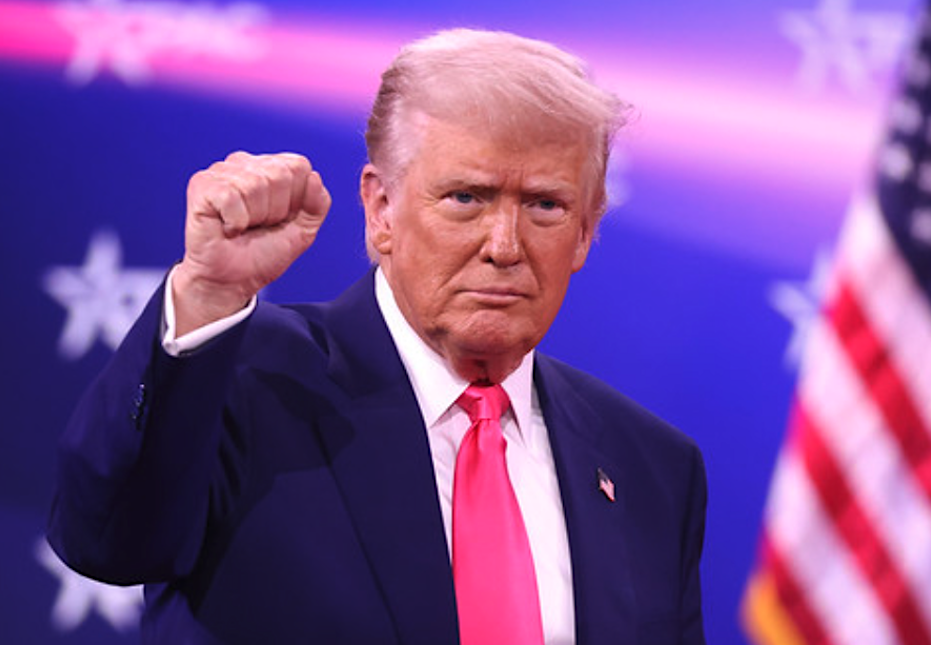 Leo XIV’s journey to Africa, from Algeria to Cameroon to Angola and finally to Equatorial Guinea, was in fact intertwined with a confrontation between two opposing worldviews : that of the pope and that of the American superpower embodied by Donald Trump.
It was no coincidence but a deliberate choice for Leo to begin his journey from the land of his great teacher, Augustine of Hippo. The pope’s geopolitical vision is so inspired by Augustine’s masterpiece, “De civitate Dei,” that he built his whole speech on January 9 to the diplomatic corps accredited to the Holy See on this very book, according to the model of the two cities : “the city of God, which is eternal and characterized by God’s unconditional love (amor Dei), as well as love for one’s neighbor, especially the poor. Then there is the earthly city […] centered on pride and self-love (amor sui), on the thirst for worldly power and glory that leads to destruction.”
“Christians,” he said, “are called by God to dwell in the earthly city with their hearts and minds turned towards the heavenly city, their true homeland” And both correspond to two different types of peace : that which is wedded to truth and justice and has its source in Christ, and that which instead is sought within oneself and always leads to new acts of violence in the name of self-love.
It is precisely by virtue of this contrast that Pope Leo’s preaching has repeatedly called into question the president of the United States, without naming him but with clear reference to him as well.
To the evident annoyance of the White House, which read precisely that speech of Leo’s to the diplomatic corps as the beginning of a crescendo of criticism of Trump, and right away wanted to express its disapproval to the Vatican nuncio to the United States at the time, Cardinal Christophe Pierre, summoned to the Pentagon on January 22 by Under Secretary of Defense Elbridge A. Colby, according to what was revealed by Free Press in early April.
That this rebuke was the actual reason for the unusual conversation has been denied by both the nunciature and the U.S. embassy to the Holy See, and most recently by the director of the Vatican press office, Matteo Bruni. But that serious friction was already underway was confirmed by what happened next, especially after the start of the war against Iran.
On March 29, in his Palm Sunday homily, Leo said, quoting the prophet Isaiah, that our God is a God “who rejects war, whom no one can use to justify war. He does not listen to the prayers of those who wage war, but rejects them, saying : ‘Even though you make many prayers, I will not listen : your hands are full of blood’ (Isaiah 1:15).”
On April 7, at Castel Gandolfo, after Trump had threatened to destroy the whole people of Iran and its entire civilization overnight, the pope told journalists, without even waiting for them to question him, that “this is truly unacceptable” and urged “everyone to pray, but also to seek to communicate with members of Congress, with the authorities, to say that we do not want war, we want peace.”
And again, on April 11, at the prayer vigil for peace held at St. Peter’s, Leo branded “that delusion of omnipotence that surrounds us and is becoming increasingly unpredictable and aggressive,” going so far as to “drag even the holy Name of God, the God of life, into discourses of death” and, worse, “turning themselves and their own power into a mute, blind and deaf idol (cf. Ps 115:4 – 8), to which they sacrifice every value, demanding that the whole world bend its knee.”
It was this crescendo that prompted Trump to intervene in person and in his own way, on April 12, on the eve of the pope’s departure for Algeria, with an invective by his own hand on Truth, in which he begins by disqualifying Leo as “weak on Crime, and terrible for Foreign Policy.” And he continues :
“He talks about ‘fear’ of the Trump Administration, but doesn’t mention the fear that the Catholic Church, and all other Christian Organizations, had during Covid when they were arresting priests, ministers, and everybody else, for holding Church Services, even when going outside, and being ten and even twenty feet apart. I like his brother Louis much better than I like him, because Louis is all Maga. He gets it, and Leo doesn’t ! I don’t want a Pope who thinks it’s Ok for Iran to have a Nuclear Weapon. I don’t want a Pope who thinks it’s terrible that America attacked Venezuela, a Country that was sending massive amounts of Drugs into the United States and, even worse, emptying their prisons, including murderers, drug dealers, and killers, into our Country. And I don’t want a Pope who criticizes the President of the United States because I’m doing exactly what I was elected, in a landslide, to do, setting Record Low Numbers in Crime, and creating the Greatest Stock Market in History.
“Leo should be thankful because, as everyone knows, he was a shocking surprise. He wasn’t on any list to be Pope, and was only put there by the Church because he was an American, and they thought that would be the best way to deal with President Donald J. Trump. If I wasn’t in the White House, Leo wouldn’t be in the Vatican.
“Unfortunately, Leo’s Weak on Crime, Weak on Nuclear Weapons, does not sit well with me, nor does the fact that he meets with Obama Sympathizers like David Axelrod, a loser from the Left, who is one of those who wanted churchgoers and clerics to be arrested. Leo should get his act together as Pope, use Common Sense, stop catering to the Radical Left, and focus on being a Great Pope, not a Politician. It’s hurting him very badly and, more importantly, it’s hurting the Catholic Church!”
On the same day, again on Truth, the American president published an image depicting him as Christ, intent on healing a sick person : an image quickly taken down due to the explosion of protests in the camp of Trump’s supporters.
And Leo ? On the plane taking him to Algeria on the morning of Monday, April 13, while meeting with the press, he reacted with these words, mentioning the American president for the first time : “I have no fear of neither the Trump administration nor of speaking out loudly about the message of the Gospel. And that’s what I believe I am called to do and the Church is called to do. […] I do not look at my role as being political, a politician ; I don’t want to get into a debate with him. I don’t think that the message of the Gospel is meant to be abused in the way that some people are doing, and I will continue to speak out loudly against war, looking to promote peace, promoting dialogue and multilateral relationships among the states to look for just solutions to the problems. Too many people are suffering in the world today, too many innocent people are being killed, and I think someone has to stand up and say there’s a better way [unintelligible].” And as for the social network Truth, on which Trump published his attack, he said, “It's ironic — the name of the site itself. Say no more.”
A few hours pass, and on Tuesday, April 14, in an early morning phone call with the New York correspondent of Corriere della Sera, Trump again attacks Leo : “He doesn’t understand it, he is not the guy that should be talking about war, because he has no idea what’s going on. He doesn’t understand that in Iran they killed 42,000 protesters last month. He doesn’t understand that, does he?”
And again the same day, in another post on Truth, he insists on putting Leo on the ropes : “Will someone please tell Pope Leo that Iran has killed at least 42,000 innocent, completely unarmed, protesters in the last two months, and that for Iran to have a Nuclear Bomb is absolutely unacceptable.”
Among the politicians closest to Trump, Secretary of State Marco Rubio, a Catholic, stands out for his silence. Vice President JD Vance, also a fervent Catholic, appears more vocal, admonishing the pope in various statements to “stick to matters of morality, to stick to matters of what’s going on in the Catholic Church and let the president of the United States stick to dictating American public policy.” Moreover, he warned him to “be careful” even “when he talks about matters of theology,” because when he “said that God is never on the side of those who wield the sword,” he forgets that “there is a more than a thousand-year tradition of just war theory.”
Bishop James Massa, president of the episcopal conference’s commission for doctrine, responded to Vance by stating that the war against Iran does not at all respect the canons that make a war “just,” that is, necessary and proportionate, as the Catholic Church has always maintained from Augustine onward.
As for Pete Hegseth, the secretary of defense, a member of the Communion of Reformed Evangelical Churches, a strongly conservative Calvinist denomination, he has made countless references to God fighting alongside the United States, as has already happened several times when evangelical pastors who are part of the White House Office of Faith gather around Trump in blessing. On April 15, in a religious service at the Pentagon, Hegseth believed he was quoting the prophet Ezekiel (25:17) in his support, but in reality he reeled off a grotesque variation taken from Quentin Tarantino’s film Pulp Fiction.
Against this abuse of God as god of war, Pope Leo again spoke forcefully on April 16 in Bamenda, Cameroon, the epicenter of the civil war that is bloodying that country, alluding also to many other wars : “Woe to those who manipulate religion and the very name of God for their own military, economic or political gain, dragging that which is sacred into darkness and filth. Yes, my dear sisters and brothers, you who hunger and thirst for justice, who are poor, merciful, meek, and pure of heart, you who have wept — you are the light of the world ! (cf. Mt 5:3 – 14). Bamenda, today you are the city on the hill, resplendent in the eyes of all!” Because that of today is “a world turned upside down,” the pope continued, “ravaged by a handful of tyrants” and “held together by a multitude of supportive brothers and sisters.”
Leo, the first American pope, is well aware that the city on the mountain – or “City upon a hill” – is also a founding motto of the United States, coined by the Puritan John Winthrop (1586 – 1649). He spoke to an African population, but with a universal horizon that inevitably included America, yet still – as Leo himself said on April 18 during the flight from Cameroon to Angola – holding firm that “trying to debate, again, the president […] is not in my interest at all,” especially with a talk “prepared two weeks ago, well before the president ever commented on myself and on the message of peace that I am promoting.” With JD Vance ready, this time, to declare himself “grateful to Pope Leo for saying this,” since “real disagreements have happened and will happen,” but “the reality is often much more complicated” than portrayed by the media, which “constantly gins up conflict.”
And as for the universal scope of his appeals, the pope did not fail to express sorrow on Sunday, April 19, in Angola, for “the recent intensification of attacks against Ukraine, which continue to affect the civilian population,” relief for “the announced truce in Lebanon,” and hope “that the end of hostilities throughout the Middle East may become lasting.”
On a more strictly political level, what infuriated Trump and his followers, much more than the audience given by Leo on April 9 at the Vatican to Obama’s close advisor David Axelrod, was the pope’s urging American citizens to put pressure on Congress to oppose the policies and wars backed by the president.
Trump’s invective against Leo was aimed precisely at bolstering that segment of public opinion in the United States which has always viewed the Catholic pope as a foreigner to be kept at a distance, no matter if born in Chicago. Meanwhile, conversely, Leo has capitalized on the awareness that Trump’s warmongering policies are prompting many criticisms even among those who have supported him until now.
And judging by what is happening, the pope has hit the mark.
Among the American bishops, deeply divided for years, beyond the predictable and very harsh reactions of progressive cardinals Blase Cupich of Chicago, Robert McElroy of Washington, and Joseph Tobin of Newark in a joint interview on the historic CBS program “60 Minutes,” very significant criticisms have been raised even among those who until recently were most sympathetic to Trump. Support for the pope has not only come from the president of the episcopal conference, Paul Coakley, and the military ordinary, Timothy Broglio, who even went so far as to encourage conscientious objection to unjust war orders among American soldiers, but also from the bishop of Winona-Rochester, Minnesota, Robert Barron, widely followed on social media, welcomed to the White House as an Easter guest just a few days earlier but now siding against the president, urging him to apologize for his “entirely inappropriate and disrespectful” remarks.
Even among Catholics, who by a clear majority voted to elect Trump, many were displeased with the president’s anti-papal invectives. They have been given a voice by EWTN, the largest Catholic media conglomerate in the world and the first in the United States, of a markedly conservative outlook, where one of its most prominent hosts, Raymond Arroyo, did not hesitate to discredit Trump’s remarks : “This was a sloppy and frankly disrespectful attack on the pope.” The most refined voice of conservative Catholic thought, the magazine First Things, also expressed strong criticism.
But even more revealing was the disastrous rally held on April 15 in Athens, Georgia, by Turning Point, the movement left by the young Trumpian activist Charlie Kirk, very religious and a great crowd-drawer, killed in September 2025.
There to enliven the rally, in the absence of Kirk’s widow, Erika, was JD Vance, fresh from the failed first negotiations with Iran in Islamabad. But instead of receiving applause, he found himself facing a half-empty venue, awkward questions, and unusually harsh criticism. And all of this was due to Trump’s attack on Leo and his meme of himself dressed as Jesus and healing the sick, both branded as unacceptable by many in attendance, Catholics and Protestants of various stripes, including Doug Wilson, co-founder of the denomination to which Defense Secretary Hegseth belongs.
In short, there are no signs of public opinion shifting in Trump’s favor as a result of his invective against Pope Leo. If anything, the opposite is happening.
A side note : Trump’s insistence on the pope’s silence regarding the tens of thousands of defenseless opponents of the Iranian regime massacred in the streets on January 8 and 9 in fact corresponds to the reality.
It is true that Leo’s heartfelt appeals on behalf of the civilian victims of ongoing conflicts – women, elderly, children – are countless. But they are always general appeals, never explicitly referring to Iran. And even regarding the cruel repression of freedoms imposed by the theocratic regime in Tehran, the pope has always avoided explicit denunciations.
But it should be noted that this twofold silence already marks a correction with respect to a recent past in which the Holy See maintained excessive courtesy in public relations with Tehran, made only of mutual praise.
Leo’s silence is the price he pays for not further endangering the already minimal freedoms of Iranians, including those of the Catholic faith. This silence is analogous to that which he employs with China, as well as with Nicaragua, and of which Secretary of State Pietro Parolin, a disciple of the Vatican's “Ostpolitik” during the Soviet era, is a shrewd administrator.
(Translated by Matthew Sherry : traduttore@hotmail.com)
— — — —
Sandro Magister is past “vaticanista” of the Italian weekly L’Espresso.
The latest articles in English of his blog Settimo Cielo are on this page.
But the full archive of Settimo Cielo in English, from 2017 to today, is accessible.
As is the complete index of the blog www.chiesa, which preceded it.