by Sandro Magister
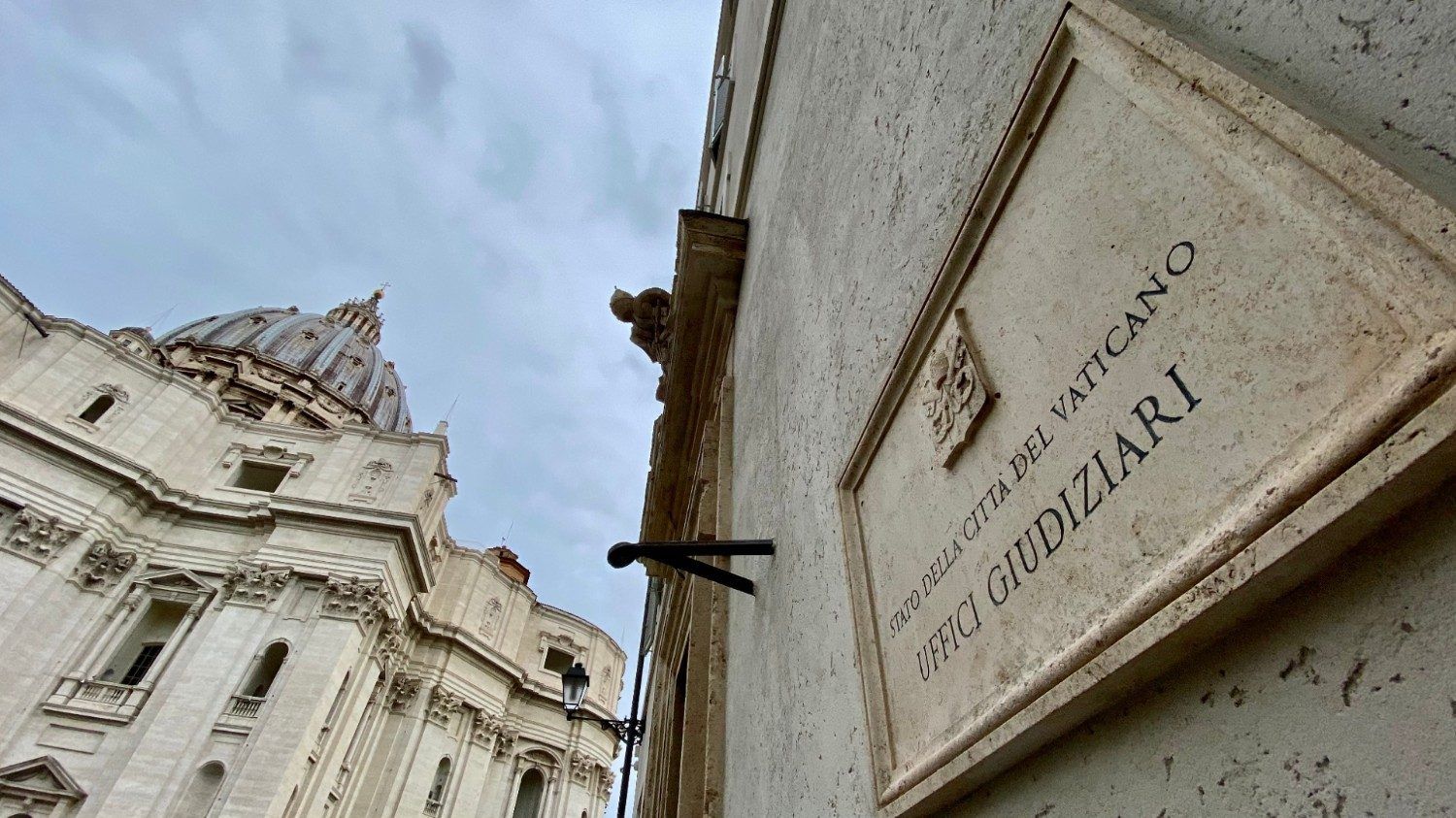 Solid expert in law that he is, Pope Leo has already left his healing mark with the radical turn that has been given at the Vatican to what is called the “trial of the century,” the one against Cardinal Giovanni Angelo Becciu and the authors of the disastrous purchase of the building at number 60 Sloane Avenue in London.
On March 17, the Vatican City State court of appeals declared the “relative nullity” of the trial of the first instance and ordered the “renewal of the hearings,” with the filing of all documents and records so as to be available to the defendants. All this in obedience to the key principles enunciated three days earlier by the pope in opening the new judicial year : “the observance of procedural guarantees, the impartiality of the judge, the effectiveness of the right to defense,” all of which were deemed to have been gravely violated in the first trial.
There is, however, another judicial aspect on which Leo’s conduct thus far appears more uncertain. And it is that of canonical trials for sexual abuse committed by members of the clergy against minors and “vulnerable” adults.
On March 18, in a letter written on his behalf by cardinal secretary of state Pietro Parolin and addressed to the French bishops gathered in plenary assembly in Lourdes, the pope asked them to continue to demonstrate both “the Church’s concern for the victims” and “God’s mercy toward all,” adding immediately that “priests guilty of abuse should not be excluded from this mercy and should be the object of your pastoral reflections.”
This was followed by protests from the most combative victims’ advocates, over this equality of protection desired by Leo, including for the authors of abuse. But it must be said that Robert F. Prevost had previously spoken out in defense of the rights of all, even though he was aware that “saying this sometimes causes greater suffering for the victims.”
First of all, he said it in the book-length interview with Elise Ann Allen released in Peru at the end of the summer of 2025 :
“The fact that the victim comes forward and makes an accusation, and that the accusation is presumably well-founded, does not negate the presumption of innocence. Therefore, the accused must also be protected ; his rights must be respected.” Also because “statistics show that well over 90 percent of people who come forward and make accusations are genuine victims ; they are telling the truth, not making things up. But there have also been proven cases of some kind of false accusation. There have been priests whose lives have been destroyed because of this.”
Again in that book-length interview, Leo also said that although the issue of abuse is of fundamental importance, the Church cannot obscure the heart of its mission : “We can’t make the whole Church focus exclusively on this issue, because that would not be an authentic response to what the world is looking for in terms of the need for the mission of the Church.”
On November 4, Leo reiterated that “the Church must respect the rights of all individuals” and that “the presumption of innocence until proven guilty applies in the Church as well,” in response to a question at Castel Gandolfo about the ongoing canonical trial against the artist and former Jesuit Marko I. Rupnik.
But this very process is also the most emblematic of the opacities and inconsistencies that still persist in the Holy See’s proceedings in the field of abuse.
The Rupnik case has been covered more than once by Settimo Cielo. Having come to light with the first public charges in December 2022, it had already had a secret prologue in May 2020 with the excommunication of the famous mosaic artist for having absolved in confession an accomplice of a sin “against the sixth commandment”: this excommunication, however, was promptly revoked at the behest of Pope Francis.
A second proceeding for sexual abuse of some consecrated women from the community he founded was initiated against Rupnik in 2021, but was also closed in October 2022 on the grounds that the acts charged to him, despite “the confirmation of the actual solidity of the accusations,” were “to be considered unprosecutable under the statute of limitations.”
Once the case became public knowledge, it was the Society of Jesus that imposed sanctions on Rupnik, which he largely ignored, and finally expelled him from the order, deeming the reported acts of the numerous victims not only credible but also of unheard-of gravity, with systematic violations of spirit and body in the name of aberrant theological and mystical justifications.
But meanwhile Rupnik did not admit his guilt at all, was incardinated as a priest in the Slovenian diocese of Koper, and continued to enjoy strong protection, in particular from the pope’s vicar at the time in the diocese of Rome, Cardinal Angelo De Donatis, now the major penitentiary of the Holy See, who attributed the whole thing to a “malicious media campaign.”
The push for a conclusive trial came from the pontifical commission for the protection of victims, headed by Cardinal Sean O’Malley, which managed to convince Pope Francis to order the opening of a new trial on October 27, 2023, this time without the twenty-year statute of limitations that applies to almost all the crimes Rupnik is accused of.
In fact, in the summer of 2020 Pope Francis had introduced new rules into canonical trials that not only authorized but indeed encouraged the waiving of this requirement, in the name of the “zero tolerance” universally and vociferously demanded against those accused of sexual abuse : a waiver now widely adopted in canonical trials, but which all jurists know is unthinkable in secular law and which opens the door to forms of summary justice that are the polar opposite of the due process to which Pope Leo is so attentive.
The fact is, however, that this trial too is proceeding with extreme difficulty. It took until October 13, 2025, to learn that the dicastery for the doctrine of the faith had finally selected and appointed the judges, five “women and clerics” not affiliated with the Holy See, whose names, however, remain unknown. “Judicial processes take a long time, and I know it is very hard for victims to be asked for patience,” Leo said on this matter on November 4, with words that still remain valid today, with no visible movement forward.
But something else has happened in the meantime, which touches the very person of the pope.
On November 22, 2025, a young Peruvian woman named Ana María Quispe Díaz, who had said that as a child she had been a victim, along with two of her sisters and other girls, of sexual abuse, said in a statement that she had been informed that ten days earlier, on November 13, the pope had granted a dispensation from the clerical state and exemption from any canonical process to the Chiclayo priest Eleuterio Vásquez González, known as “Lute,” their alleged abuser during the years when Robert F. Prevost was bishop of that diocese.
The first investigation following the complaint had also been conducted “with procedural errors,” according to the person responsible for abuse cases in the diocese of Chiclayo, but what Ana María Quispe Díaz most protested over was the denial of a regular trial that would finally ascertain the truth of the facts and protect the victims.
The statement concluded with a “request for a personal audience with the pope, to explain the pain that situations like this cause victims and to ask him for a change of course in the way the Church deals with cases of abuse.”
Prevost’s main defenders, both as bishop of Chiclayo and as pope, since these accusations first surfaced in 2023, were two Peruvian journalists, Paola Ugaz and Pedro Salinas, his friends for years and very active since 2015 in denouncing the crimes of a society of apostolic life founded in Peru, the “Sodalitium Christianae Vitae,” dissolved by Pope Francis at the end of his pontificate.
But he, Prevost, has never said a single word in public about these accusations against him, not even after Ana María Quispe Díaz directly called him out on them. The complete opposite of what Benedict XVI did when faced with similar accusations of having “covered up” for an abusive priest during his years as archbishop of Munich and Freising.
Indeed, when these accusations were relaunched against him in his final year, in January 2022, Benedict XVI again reacted, with an 82-page testimony drafted by a group of friends on the basis of extensive documentation, followed by a personal statement correcting “an oversight” in the report and introduced by a February 6 letter to the faithful of the German archdiocese.
A letter that is one of his very last writings and is a must-read. In it Benedict XVI recalls the confession and petition for forgiveness for our “most grievous” fault with which “day after day the Church begins the celebration of Holy Mass.” And he continues :
“I have come increasingly to appreciate the repugnance and fear that Christ felt on the Mount of Olives when he saw all the dreadful things that he would have to endure inwardly. Sadly, the fact that in those moments the disciples were asleep represents a situation that, today too, continues to take place, and for which I too feel called to answer. And so, I can only pray to the Lord and ask all the angels and saints, and you, dear brothers and sisters, to pray for me to the Lord our God.”
And again :
“Quite soon, I shall find myself before the final judge of my life. Even though, as I look back on my long life, I can have great reason for fear and trembling, I am nonetheless of good cheer, for I trust firmly that the Lord is not only the just judge, but also the friend and brother who himself has already suffered for my shortcomings, and is thus also my advocate, my Paraclete. […] I am constantly reminded of what John tells us at the beginning of the Apocalypse : he sees the Son of Man in all his grandeur and falls at his feet as though dead. Yet He, placing his right hand on him, says to him : ‘Do not be afraid ! It is I’ (cf. Rev 1:12 – 17).”
(Translated by Matthew Sherry : traduttore@hotmail.com)
— — — —
Sandro Magister is past “vaticanista” of the Italian weekly L’Espresso.
The latest articles in English of his blog Settimo Cielo are on this page.
But the full archive of Settimo Cielo in English, from 2017 to today, is accessible.
As is the complete index of the blog www.chiesa, which preceded it.